What the Asset Verification Report covers
This report looks at whether stated assets appear to exist, whether they are in the expected condition, and whether the supporting records make sense. It is not a valuation, and it does not replace legal transfer work or a full audit. It is a risk check for buyers, lenders and investors who need a clear view before money changes hands.
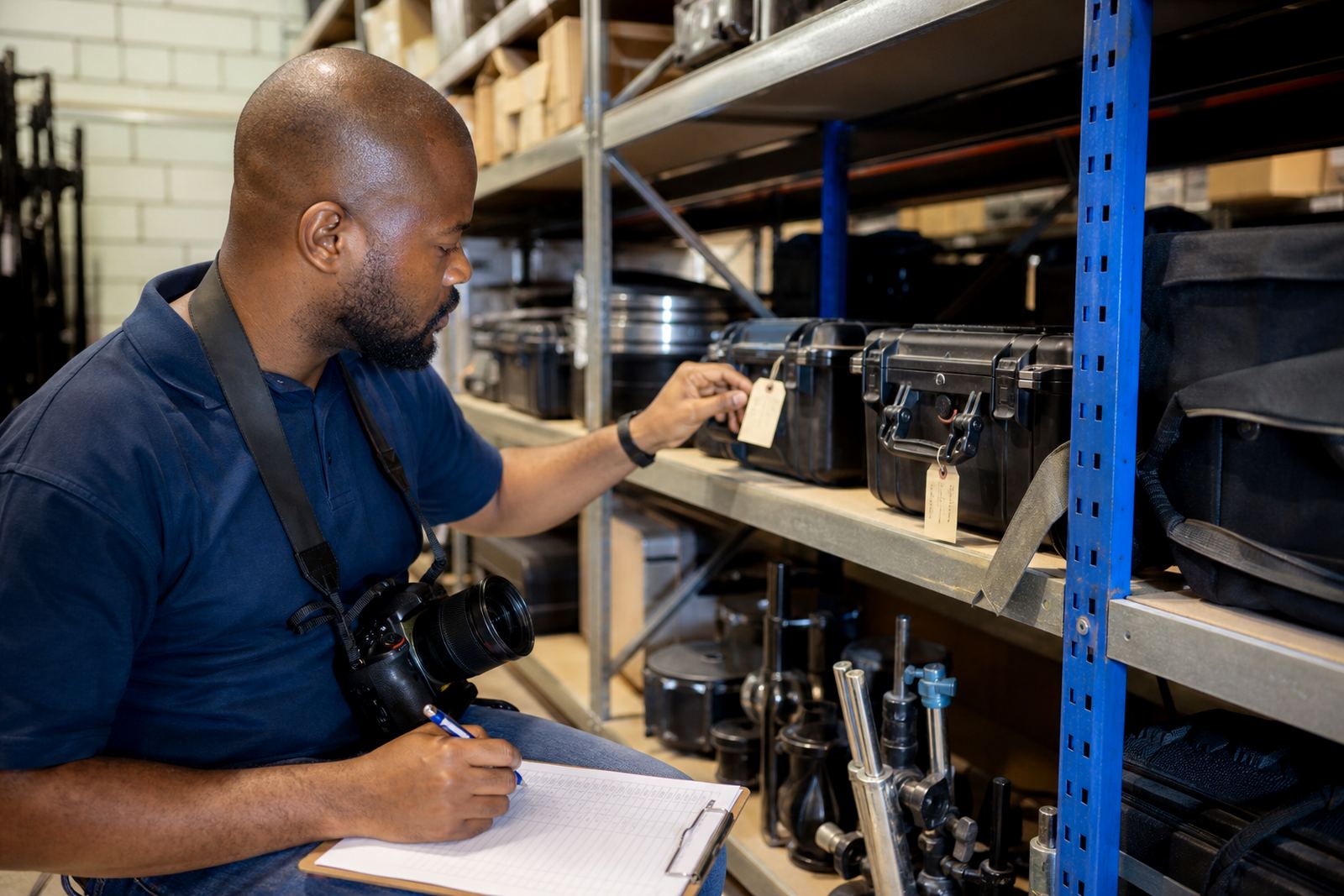
We compare the asset list supplied by the client with available records, site observations and supporting documents. That may include fixed plant, vehicles, office equipment, machinery, IT hardware, stock items or other operating assets listed in a transaction file. Where there are gaps, we flag them plainly so you can ask the right questions early.
- Record-to-site comparison of stated assets
- Photographic site evidence where access is allowed
- Consistency check against invoices, register entries and schedules
- Basic condition and utilisation observations
When this report is a good fit
This report suits asset-backed lending, business sales, share sales, supplier credit decisions and portfolio reviews. It is also useful where a lender wants to confirm that assets listed as security are present on site and used in the business as described. In Gauteng, Cape Town, Durban and other major metros, this is often done before final approval when the numbers on paper need a physical check.
It can be ordered for a single site, a branch network or a group of locations. For a manufacturing line in Pretoria, a warehouse in Johannesburg, a cold storage facility in Durban or a trading business in Bloemfontein, the scope can be set around what matters most to the transaction.
- Business acquisitions and share sales
- Asset-based finance and secured lending
- Supplier account opening and credit decisions
- Branch, depot or warehouse verification
Sites, asset types and report sizes
The report can be scaled to suit one address or a wider portfolio. A compact review may cover only the key assets that support the deal, while a fuller schedule can include multiple asset classes across several branches. If you need a tighter turnaround, we can keep the scope focused to the most material items first.
Typical asset groups include vehicles, machines, movable equipment, office fit-out items, tools, security equipment and stock holding where relevant. For sites with heavy power use or intermittent load-shedding, we also note whether backup systems are present and whether they appear suitable for the operation. If gas or fuel-powered equipment is part of the operation, that can be checked too.
- Single-site report: one location and the main assets on that site
- Multi-site report: branch-by-branch review with summary findings
- Focused schedule: only high-value or security-critical assets
- Extended review: assets plus related document gap checks
What we check during verification
We look for signs that the stated assets are where they should be, match the description provided and appear to support the business activity claimed. Where possible, we compare serial numbers, registration details, asset tags and location descriptions. If something does not line up, the report will show that clearly instead of smoothing it over.
The process is practical. We are not there to admire the site, we are there to check what is real, what is missing and what needs follow-up. If access is limited, the report will state that too, because a restricted visit can affect confidence in the findings.
- Asset presence and location confirmation
- Serial number or identifier checks where visible
- Condition notes on obvious wear, damage or neglect
- Cross-checks against supplied schedules and supporting papers
- Occupancy or control signals where relevant to the asset set
Installation, power and operating conditions
For some assets, the way they are installed or powered matters as much as the item itself. A machine that needs three-phase power, proper ventilation or specific mounting will not be suitable if the site cannot support it. We therefore note the basic operating setting where that affects the risk, including visible cabling, backup supply, fuel storage or gas connections where relevant and safe to observe.
Coastal humidity, dust, heat and load-shedding can affect condition and uptime, especially in Durban, Cape Town or industrial areas with exposed equipment. If the asset list includes refrigeration, IT systems, workshop machines or security equipment, we pay attention to practical site conditions that may affect ongoing use.
- Power dependency: mains, generator, inverter or battery support
- Ventilation and space requirements for fixed equipment
- Visible protection against dust, moisture and coastal air exposure
- Basic operating readiness and site suitability notes
Care, servicing and document gap review
An asset can exist and still be a poor security or lending item if it has not been serviced, insured or recorded properly. We therefore check whether there is a sensible paper trail for maintenance, inspections, warranties or replacement planning where such records are supplied. If the documentation is thin or inconsistent, that is a useful risk signal on its own.
We also flag missing asset schedules, unclear ownership records, weak tagging systems and inconsistent register entries. In practice, these gaps often matter as much as the on-site findings because they affect recoverability, control and dispute risk later on.
- Maintenance or service record presence
- Asset register and schedule consistency
- Insurance or security documentation gap review
- Control issues where assets appear shared, moved or poorly tracked
What to check when you place the order
Before ordering, decide exactly which assets matter, which sites must be included and whether the report should focus on confirmation only or also on document gaps and control issues. The clearer the instruction, the cleaner the result. If a lender is involved, align the scope with the security question being asked so the report does not waste time on low-value items.
It helps to confirm the latest asset schedule, the site address, access contact, preferred time for a visit and any items that are sensitive, locked away or difficult to view. If the business operates across Centurion, Pretoria, Johannesburg, Sandton, Midrand or farther afield in South Africa, we can shape the scope around the locations that actually matter to the transaction.
- Latest asset list or schedule
- Site addresses and access arrangements
- Priority assets for close checking
- Any known restrictions, such as security, shift work or limited site access
Key facts
| Report type | Asset verification and consistency check |
|---|---|
| Scope | Single site, multi-site or portfolio review |
| Typical use | Buyer due diligence, lender security checks, transaction support |
| Evidence base | Records supplied, site observations and supporting documents |
| Asset classes | Vehicles, machinery, equipment, stock and fixed assets |
| Coverage | Centurion, Pretoria, Johannesburg, Sandton, Midrand and nationwide |