

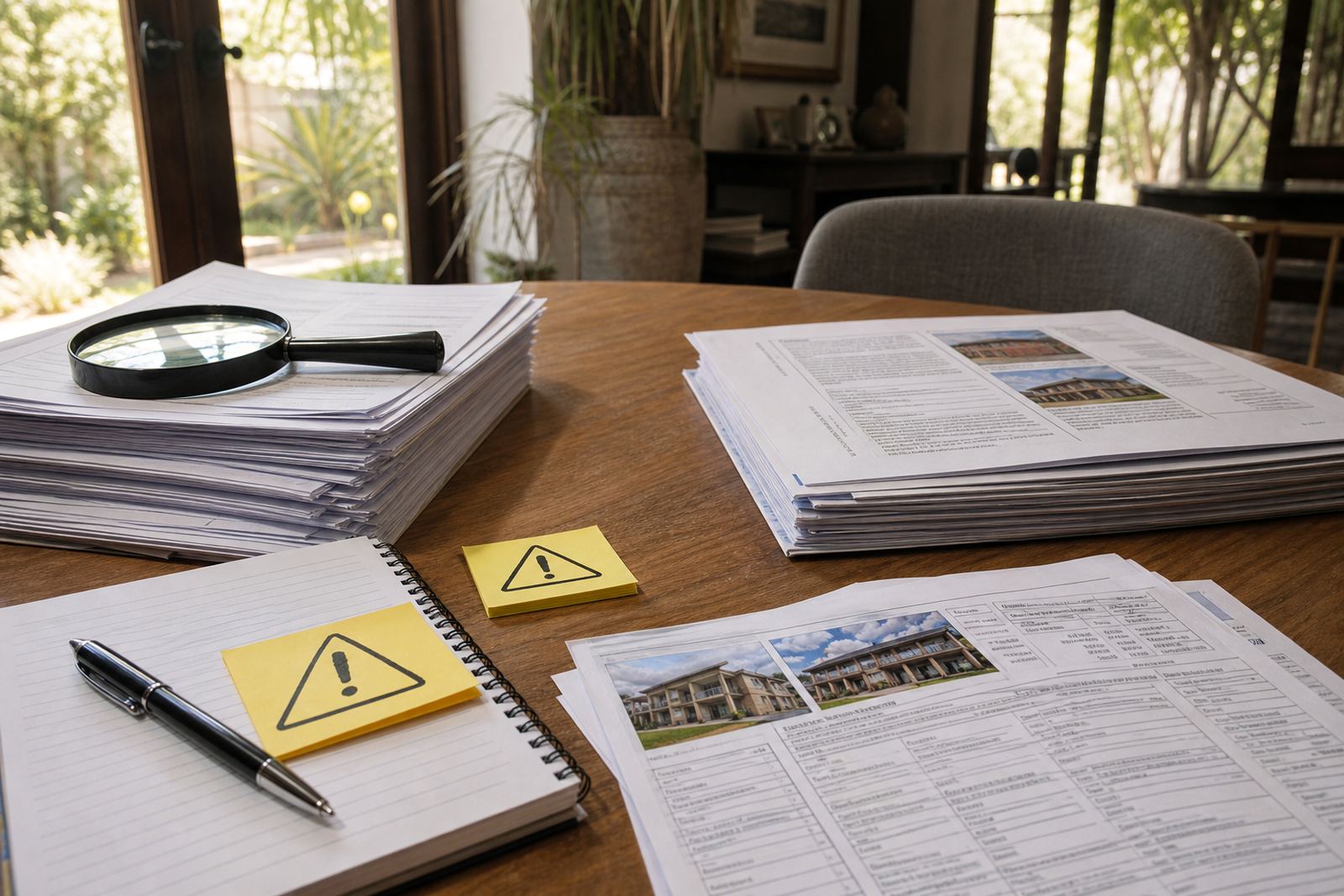
What an encumbrance check report covers
This report is built to flag recorded matters that can complicate a purchase or bond, from restrictive conditions and servitudes to cautions that may affect transfer. It is not a general property summary, it is a targeted review of the burden on title and the issues that normally need closer legal follow-up.
We prepare the report from available records and supporting searches, then present the findings in plain language. That helps buyers in Pretoria, Johannesburg, Cape Town, Durban, Bloemfontein and surrounding areas see whether the property is clean enough to move forward or whether there are items that need a hold, query or legal condition before signature.
- Recorded burdens and title restrictions
- Servitudes, endorsements and conditions
- Transfer issues that may delay registration
- Red flags that deserve attorney review
When this report is the right fit
An encumbrance check is most useful when the transaction is already under discussion and you need a quick, practical view of risk. It suits residential and commercial property, vacant land, sectional title units, and properties being bought for investment or lending purposes. If you are not yet ready for a full due-diligence pack, this report gives you a tighter lens on title-related concerns without unnecessary noise.
It is also useful where a client has an auction property, a deceased estate, a distressed sale or a property with older registrations that may carry historic conditions. In coastal areas like Durban and Cape Town, buyers often want clarity on restrictions, municipal matters and access rights before committing. In Gauteng, it is common to see this report used alongside bond approval and pre-transfer checks.
- Buying before bond approval is finalised
- Assessing auction or distressed sale risk
- Checking inherited or older title records
- Reviewing investment properties before offer acceptance
Report options and detail levels
We can tailor the scope to suit the transaction. Some clients want a short-form encumbrance snapshot for an early decision, while others prefer a fuller report with document references and practical notes for legal or funding teams. The level of detail should match the value of the deal and how far along the transaction is.
Typical options include a concise title burden summary, a broader property risk note, or a report that is integrated into a larger company or asset due-diligence file. If the matter involves multiple properties, portfolios or linked entities, the report can be structured per erf, unit or holding so the file stays readable and easy to compare.
- Single property or multi-property formats
- Short summary or extended findings
- Buyer-focused or lender-focused layout
- Standalone report or part of a broader file
What to check before you order
To keep the turnaround tight and the result accurate, it helps to confirm the full property description, title details and the reason for the check. If you have the erf number, sectional title unit number, township name or farm portion, include it up front. Where possible, give us the intended use of the report so we can focus on the issues that matter most to the transaction.
We also recommend checking whether there are linked parties, trusts, companies or multiple owners involved. That helps when a matter needs cross-referencing with company records, ownership verification or document gap review. A few minutes spent upfront can save a lot of back-and-forth later, especially where the file is moving through attorneys, lenders and transfer teams at the same time.
- Correct erf, unit or farm portion details
- Full names of current owners or entities
- Transaction purpose and urgency
- Any known disputes or pending transfer issues
Turnaround, delivery and file handling
These reports are issued electronically, so there is no installation, power supply or gas requirement. Clients only need a stable internet connection to receive the file and share it with their legal or finance teams. For busy offices in Centurion, Sandton or Midrand, that keeps the process simple and avoids delays from physical collection or courier runs.
Our team in Centurion handles the research, verification and quality review before release. Depending on the scope and record complexity, the turnaround can be arranged for urgent or standard matters. If a title file is messy, missing pages or tied to older registrations, we will say so clearly rather than forcing a clean answer where the records do not support one.
Care, updating and practical use
An encumbrance check report is best treated as a transaction document, not a one-time brochure. If the deal changes, if new documents arrive, or if there is a delay in registration, the report may need updating so the parties are working from the latest position. That matters when a sale stretches over weeks or the lender asks for fresh confirmation before drawdown.
For property teams and lenders, good care means filing the report with the offer, bond pack and transfer documents, and then noting any follow-up items that still need resolution. If you are comparing several properties in one portfolio, ask for the findings to be laid out consistently so risk can be compared like for like across each asset.
- Keep the report with the transaction file
- Update it if new title documents are issued
- Use it with legal advice, not instead of it
- Compare repeated findings across portfolio assets
Key facts
| Report type | Encumbrance check report for property and transaction review |
|---|---|
| Primary use | Identify recorded burdens, restrictions and title-related issues |
| Typical users | Buyers, lenders, attorneys, investors and transfer teams |
| Coverage | Residential, commercial, sectional title, vacant land and farm portions |
| Delivery | Electronic report supplied after research and verification |
| Base area | Centurion, Gauteng with coverage across South Africa |