

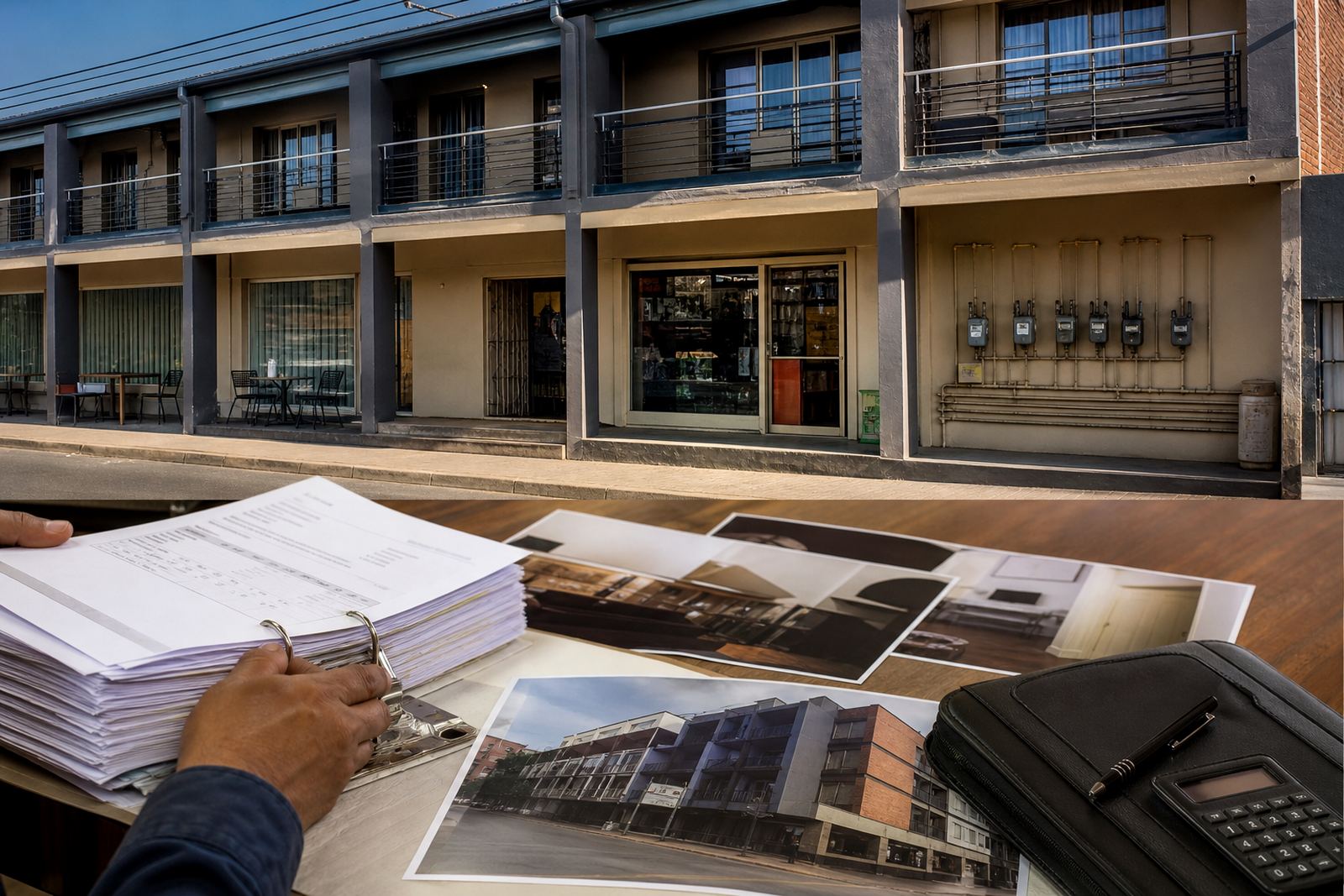
What a mixed use report covers
Mixed use properties can look simple from the outside, but the risk profile changes once you add tenants, sectional use rights, trading hours, parking allocations and separate access points. A single erf may carry flats above shops, a home office component, or a small office block with retail at street level, so the checks need to follow the way the property is actually used not just what the seller says.
Our report brings together company and property due diligence in one practical document. It is used when a buyer, lender or adviser needs a clear picture of who owns the asset, who occupies it, what the current use is, and whether the transaction file is complete. That includes ownership verification, property record searches, director profile research where an entity is involved, site visit verification, occupancy checks and adverse media research where relevant.
The aim is to flag issues early, before bonds are approved or transfer costs start stacking up. In Gauteng, the Western Cape and the major metros, mixed use buildings often carry more than one decision maker, so a good report helps everyone work off the same facts.
Sizes and report options for different asset types
Not every mixed use holding needs the same depth of review. A two unit building in Centurion is not the same as a multi storey block in Sandton or a coastal retail and apartment scheme in Cape Town. We shape the report around the asset size, the number of occupiers, and the level of lending or acquisition risk.
- Small mixed use holdings: one to three uses in a single erf or sectional title scheme, often owner occupied with one or two tenancies.
- Medium portfolios: several units or one building with separate residential, office and retail income streams.
- Complex assets: multi tenant buildings, layered ownership, related party leases or incomplete transaction files.
- Custom reporting: added checks for municipalities, body corporates, leases, historic arrears or missing compliance records.
Where the deal is straightforward, the report can be kept concise. Where the ownership is layered or the occupancy is unclear, we add more verification and document review so the lender or buyer can see exactly where the gaps are. That extra detail matters when the asset carries a mix of private, commercial and sectional title use.
Where a mixed use report suits best
This report suits buyers and lenders dealing with assets that generate income from more than one use. It is particularly useful where the ground floor is retail, the upper floor is residential, or an office component is being held with rental units in the same structure. We also see it used for owner run businesses where a family home is partly used for trade, or where a building has converted uses over time.
In Pretoria, Johannesburg, Sandton and Midrand, mixed use stock often changes hands with tight turnaround times, and load-shedding back-up systems, parking rights and access control can affect both value and occupier stability. In Cape Town and Durban, coastal humidity, corrosion, fire systems and maintenance history can also influence risk. A buyer or lender needs to know whether the asset is being used as permitted and whether the income on paper matches what is happening on site.
- Suitable for acquisition due diligence before signing or before final loan approval.
- Useful for refinance cases where the lender wants a clean asset summary.
- Helpful for portfolio reviews across more than one town or province.
- Practical for complex family owned or company owned properties with mixed occupancy.
For Bloemfontein and other inland centres, the focus may lean more toward title, tenant mix and document completeness, especially where the building has been altered over time and records are not all held in one place.
Site checks, occupancy and practical verification
Mixed use assets need field verification because paper records alone do not always show the full picture. A shop may be trading under one name while the lease sits in another, or residential rooms may be occupied differently from what the seller declared. Our field verification lead checks the site use, occupancy patterns, signage, visible access arrangements and any signs of vacant or underused areas.
Where needed, the report includes occupancy checks, document gap review and transaction file audit. That helps to catch missing lease pages, unsigned schedules, expired municipal documents or proof of consent that never made it into the file. It also gives the lender or purchaser a cleaner picture of who is in occupation and whether the asset is being managed in a way that matches the stated income.
When a building has both residential and commercial tenants, this step is often the one that saves time later. It can uncover small issues, like an unrecorded storeroom use or a change in access arrangement, before those issues become a problem during transfer or bond registration.
Power, gas and building services to confirm
Mixed use properties often depend on more than standard utility supply. In busy centres, power continuity can affect trading hours, lift access, security systems and cold storage, while gas installations may support cooking areas, hot water or tenant fitouts. If the asset uses backup power, solar, batteries or generator support, the report should confirm what is in place and whether it appears to serve the whole holding or only part of it.
Before ordering, it helps to check the following:
- Whether the property has one shared municipal account or split services.
- Whether the building has verified backup power for lifts, gates or lighting.
- Whether any gas installations are used in retail or residential sections.
- Whether water metres, fire systems and refuse arrangements are shared or separate.
- Whether the occupiers need special access for deliveries, parking or after hours use.
These details matter because utility arrangements affect operating costs and can expose hidden obligations. If there are older fittings, hot water systems or compliance certificates outstanding, the buyer should know before the deal closes. In some cases the issue is minor, but sometimes it points to a broader maintenance backlog that needs attention.
Care, servicing and keeping the file current
A mixed use report is only useful if the underlying information stays current. For active assets, especially those with rolling tenancy changes, a review should be updated when leases are renewed, occupiers change, or the ownership structure shifts. This is particularly important where one part of the building is residential and another part is income producing commercial space.
We also look for changes that can affect the operating risk of the building, such as new signage, subdivision plans, alterations to access, or a shift in how common areas are used. If the property sits in a sectional title scheme, the body corporate records and levies should be reviewed carefully because arrears or unresolved rules issues can affect transfer timing. A stale file can hide a real problem, and that is where a fresh check pays for itself.
For lenders, servicing usually means keeping the report in step with the latest transaction pack. For buyers, it means having enough detail to compare the seller’s version against the facts on the ground. That is the simplest way to avoid surprises after signature.
What to check when ordering
When you order a Mixed Use Report, it helps to supply the property address, title deed details if available, the entity name if the owner is a company or trust, and any known tenant or occupier information. The more accurate the starting point, the faster the review can move. If the asset spans more than one erf, unit or sectional title section, include that as well so the search scope is right from the start.
Also check whether you need a buyer focused summary, a lender focused file or a fuller report for internal credit review. Some clients want a concise risk view, while others need a more detailed breakdown of ownership, records, occupation and adverse findings. We can customise the report to match the transaction file, which is useful when the deal crosses between commercial and residential use and there are several parties involved.
- Confirm the exact property description and use mix.
- Provide all known owner and occupier names.
- State whether the report is for purchase, refinance or portfolio review.
- Flag any urgent concerns such as vacancies, arrears or disputed occupation.
With the right brief, the report gives a practical read on the asset and the transaction. That is what buyers and lenders need when the property combines living space, trading space and office use in one holding.
Key facts
| Report type | Mixed use company and property due diligence |
|---|---|
| Typical use | Residential, retail and office combinations in one holding |
| Coverage | Ownership, occupancy, records, risk and file review |
| Area | Centurion base with coverage across South Africa |
| Best for | Buyers, lenders, advisors and portfolio reviews |
| Customisation | Available for single assets or multi site holdings |