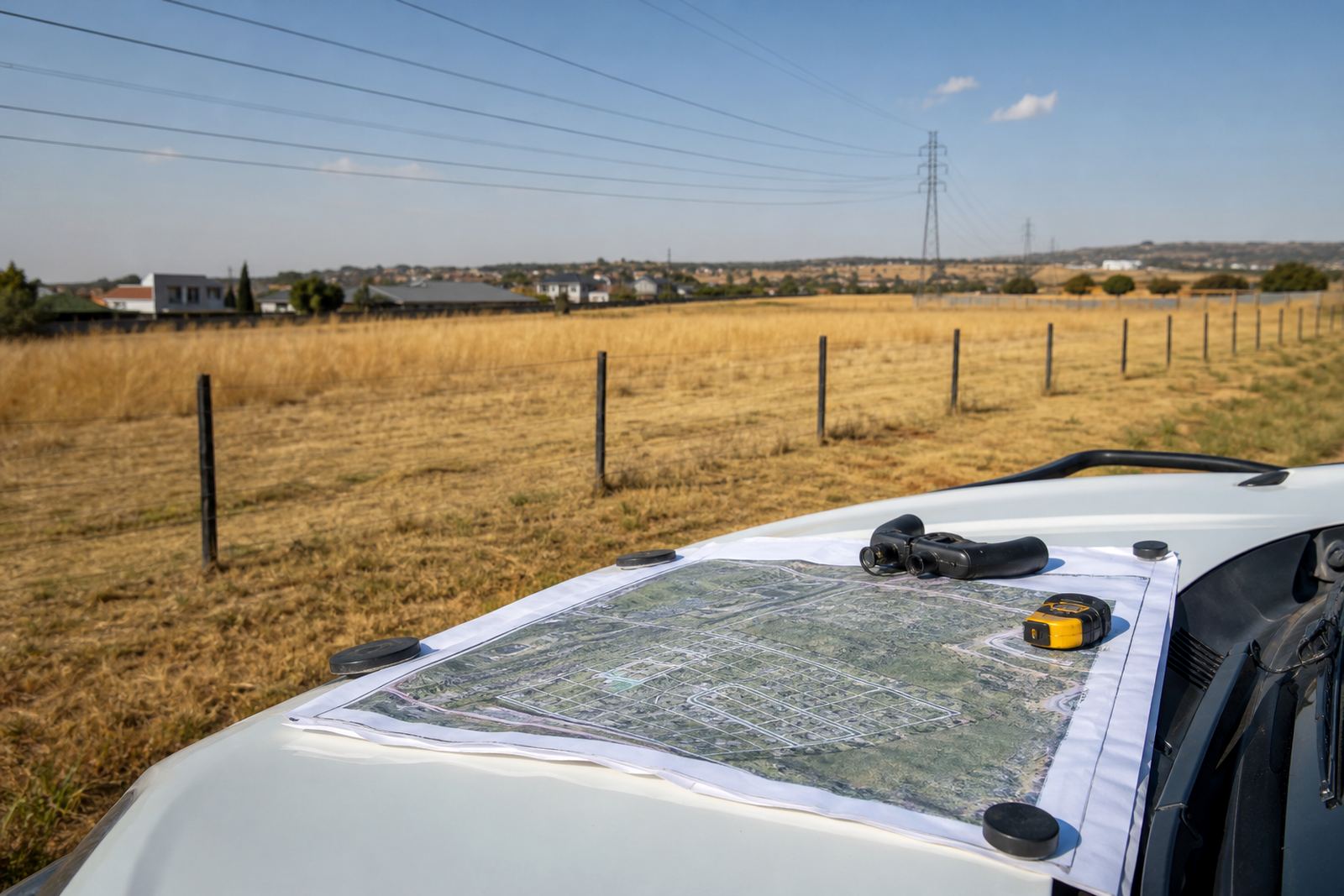
What the Vacant Land Report covers
This report is prepared for land that has no completed building, or where the site is still in the planning or early development stage. It brings together property records, ownership details and on-site observations so you can see what is already in place and what still needs to be confirmed.
For land purchases in places like Centurion, Pretoria, Johannesburg, Sandton, Midrand, Cape Town, Durban and Bloemfontein, the early questions matter most: is the erf correctly described, is there proper access, are servitudes in place, and is there anything on the ground that could delay a transfer or a loan approval. We also flag issues that may affect future use, such as drainage paths, slope, boundary markers, encroachments and nearby activity that could shape the land value.
- Ownership and title record review
- Visible access and boundary checks
- Occupancy or unauthorised use observations
- Site constraint notes for development planning
Who uses it and where it helps most
Vacant land carries a different risk profile from an existing house, factory or office. There is often less to inspect on site, so document review and field verification become more important. Buyers use this report when they want to know whether the erf is clean to acquire, whether services are likely to be available, and whether the site can support the intended use without costly surprises.
Lenders use it when they need a practical read on the asset before releasing finance. That can include a residential stand, township land, agricultural land near a developing edge, or a small commercial site where the planned use is not yet visible on the ground. It is also useful where there has been a change in ownership, a subdivision, a municipal query, or a transfer that needs a quick reality check.
- Private buyers comparing several erven
- Developers testing a site before planning spend
- Lenders assessing security for finance
- Attorneys and conveyancers needing a fact check
What we check on undeveloped sites
The report is not limited to a paper search. We look at the site itself where access is possible, then compare that with the available records. On vacant land, small details can matter a lot. A narrow access strip, an old fence line or a drainage channel can change how usable the property is and what costs may follow.
We pay attention to whether the land appears open and accessible, whether there are signs of dumping, informal use or fencing issues, and whether the area around the site suggests flood exposure, stormwater concerns or service limitations. If the land sits in a developing edge area, we also note nearby activity that may affect timing, such as road works, adjoining construction, or visible pressure on services.
- Access route and road frontage
- Boundary visibility and marker condition
- Signs of encroachment, dumping or occupation
- Visible slope, drainage and surface condition
- Nearby services, development and general site context
Site size, order options and report depth
We tailor the scope to the transaction. A small residential stand in a township does not need the same level of detail as a larger commercial or subdivision parcel. The base report can be expanded where the buyer or lender needs more verification, such as extra field checks, document cross-referencing or a stronger focus on transaction risk.
Typical options are based on the nature of the land and the urgency of the matter. For example, a straightforward vacant erf may need standard ownership and access checks only, while a larger parcel with multiple access points, possible servitudes or unclear boundary lines may call for a fuller review. If the deal is time sensitive, we can also align the reporting depth to the signing deadline so the key risks are clear before instruction moves too far ahead.
- Standard land due-diligence report for clean, single-erf transactions
- Expanded report for subdivided, access-sensitive or higher risk sites
- Added field verification where site conditions need confirmation
- Report customisation for buyers, lenders or legal teams
Power, water and other service points
Vacant land may look simple, but service readiness often becomes the costly part later on. This report helps you check what is visible and what still needs confirmation before you commit. In many areas, especially on the edges of growing towns, power connection points, water availability and sewer or septic options can differ sharply from one stand to the next.
We note visible indicators and any site factors that may affect utility connection, such as the distance to the road reserve, the presence of overhead lines, the state of the access road, or obvious constraints linked to slope and drainage. Where gas is part of the intended use, we flag whether there is any visible basis for an on-site supply plan or whether the project is likely to rely on alternative arrangements. On coastal sites, we also keep an eye on corrosion risk and moisture exposure, which can affect future fencing, service boxes and boundary hardware.
- Visible electricity access or supply proximity
- Water, sewerage and drainage considerations
- Gas planning where relevant to the intended use
- Site conditions that may affect trenching or connection works
Care, servicing and keeping the file current
Vacant land can change quickly. A site that was open and clear one month may show new activity the next. If you are buying, lending against or holding land for later development, it is worth keeping the due-diligence file current until the matter is concluded.
We recommend a fresh check when there has been a long delay between offer and registration, when municipal approvals have changed, or when the area around the site has been affected by heavy rain, informal use or boundary movement. In some parts of Gauteng and the coastal metro areas, repeated weather exposure can change the condition of access roads and visible runoff patterns. If the transaction runs over several weeks, an updated field note can help prevent avoidable surprises.
- Refresh the report if the sale stretches out
- Recheck after major rain, stormwater issues or site activity
- Confirm any new fences, occupation or ground disturbance
- Update the file before final finance release or transfer
What to check before you order
Before ordering, confirm the erf number, the exact site address or location description, and the purpose of the transaction. If you already have deeds details, surveyor information or a sale agreement, include them with your instruction so the search is properly targeted. This is especially useful where multiple vacant parcels sit in the same area, or where access is from a different road than the postal address suggests.
It also helps to state whether the report is for a purchase decision, lending decision, internal risk review or legal file. That lets us shape the emphasis around what matters most. If there is a deadline tied to approval, bond registration or a transfer date, mention it upfront so the work can be planned around it. The clearer the instruction, the more useful the report will be when the decision has to be made quickly.
- Erf number, stand number or farm portion details
- Physical location and nearest landmark
- Known access route and intended land use
- Deadline for offer, finance or transfer
Key facts
| Report type | Vacant land due-diligence report |
|---|---|
| Core focus | Title, access, visible site constraints and ownership checks |
| Typical users | Buyers, lenders, attorneys and property teams |
| Coverage area | Centurion, Pretoria, Johannesburg, Sandton, Midrand, Cape Town, Durban and Bloemfontein |
| Output format | Clear report with findings, risk notes and practical next steps |
| Custom options | Extra field verification, document gap review and report customisation |