

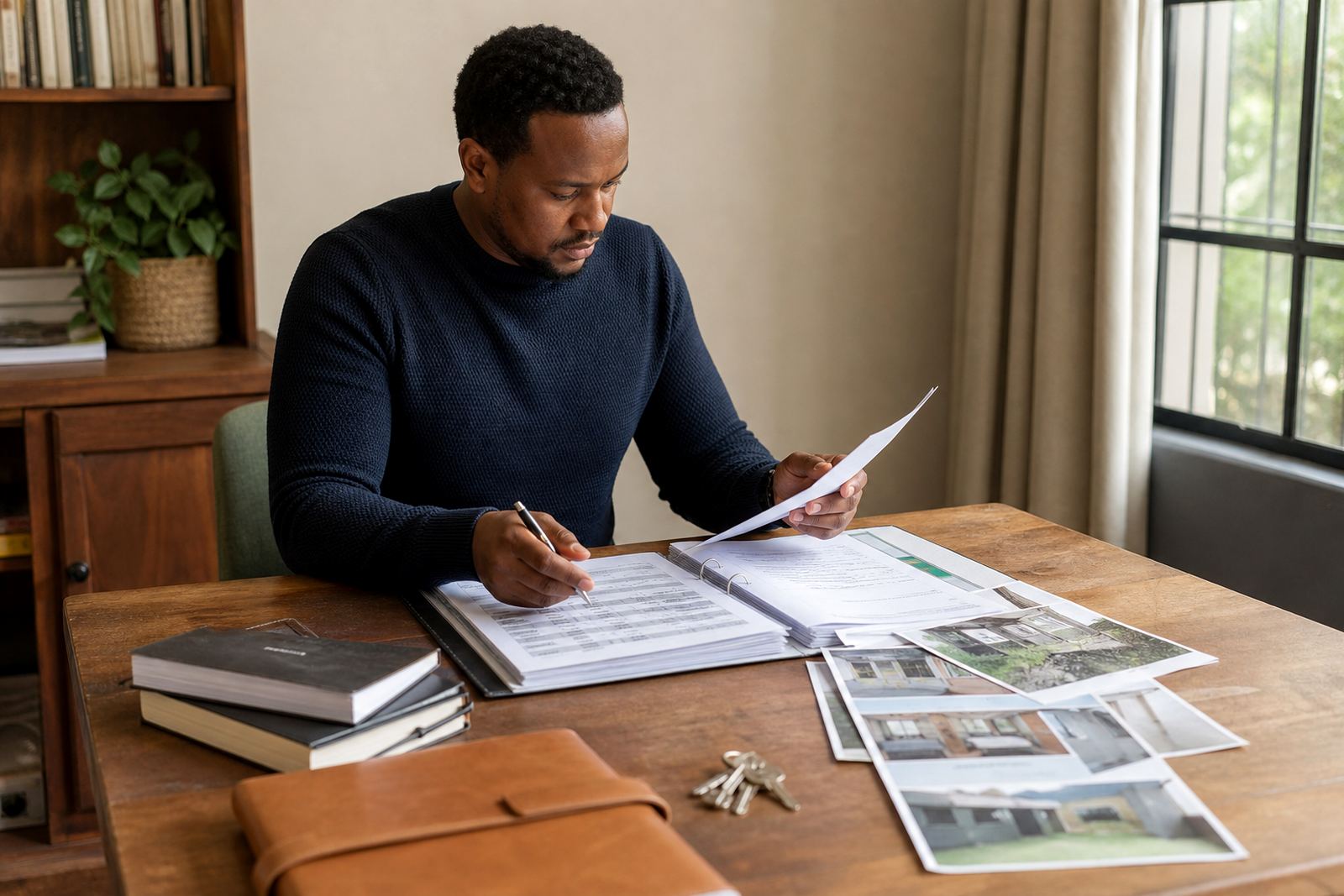
Why landlords ask for a report before signing
For a landlord, the main risk is not just a late payment, it is the knock-on effect on cash flow, municipal accounts, insurance claims and the time lost chasing a bad occupier. A due-diligence report helps you test the tenant, the property and the paperwork before the lease starts or before an existing lease is renewed.
In Centurion, Pretoria, Johannesburg, Sandton, Midrand, Cape Town, Durban and Bloemfontein, landlords use these reports when the rent looks attractive but the history is thin. That includes owner-occupiers moving into a mixed-use building, small trading businesses taking warehouse space, and residential investors leasing to a company instead of a private person.
The aim is simple: confirm who you are dealing with, check whether the property record makes sense, and spot pressure points before they become expensive.
What a landlord report normally includes
A practical report set usually combines tenant checks with asset checks. The exact scope depends on whether the lease is for a house, retail unit, office or industrial space, but the core work is similar.
- Company background checks for business tenants
- Ownership verification and title-related searches
- Director profile research and adverse media review
- Credit risk screening and transaction file audit
- Site visit verification and occupancy checks
- Document gap review for lease packs and supporting papers
- Portfolio risk mapping for landlords with several units
We also confirm basic operating facts such as whether the business is active, who controls it, and whether the stated trading address matches what is found on site. If something does not line up, that does not always mean a deal must stop, but it does mean the lease should be tighter and the risk should be priced properly.
The landlord setup: what should be checked on site
Many lease problems start with the building itself. Before you hand over keys, inspect access control, metre setup, parking bays, fire equipment, security gates, and whether the unit can be used legally for the intended purpose. In sectional title and mixed-use schemes, municipal rules, body corporate rules and zoning conditions can affect occupation far more than people expect.
For industrial and retail space, a good site check should also note loading access, roller doors, ceiling heights, power supply, and whether the unit can cope with load-shedding or business interruption. In coastal areas such as Cape Town and Durban, look carefully at damp, corrosion and roof condition because humidity can shorten the life of fittings and storage equipment.
If the tenant will fit out the space, make sure the lease is clear on reinstatement, signage, alterations, and who pays for compliance upgrades. A lot of disputes start with a vague handover note and then grow from there.
Planning the lease process so it holds up later
Landlords often do the hard work after the lease is already signed. It is better to plan the process in the same order every time: verify the party, inspect the property, check the paperwork, then issue the lease. That sequence saves time and lowers the chance of a rushed decision.
For single-unit landlords, this can be a simple due-diligence file with identity, company status, occupancy findings and a lease review note. For landlords with a few buildings or a wider portfolio, we can map risks across locations so you can see where arrears, short leases or weak occupancy patterns are building up.
- Use the same checklist for every applicant, even when the deal feels urgent
- Keep copies of utility accounts, title documents, plans and lease annexures together
- Match the use of the premises to zoning and building rules before occupation
- Set payment dates, deposit terms and default clauses before moving in
If you are buying a property that already has tenants, the same process helps you understand the lease quality you are inheriting. A building can look full and still carry a lot of income risk.
Common mistakes that lead to income loss
One common mistake is accepting a strong rental promise without checking whether the tenant can actually sustain it. Another is relying on a clean-looking company name while ignoring director history, trading activity or old disputes. It is also risky to skip an occupancy check because the unit looks occupied from the street, it may not be legally or properly used.
Landlords also get caught out by missing documents. If there is no lease annexure, no schedule of condition, or no clear handover note, then every scratch, leak or broken fitting becomes a debate later. That is where time and money disappear.
We also see owners underestimating the cost of poor compliance. A late municipal reading, an unpermitted alteration or a weak insurance record can slow recovery after a loss. The report is not there to add red tape, it is there to keep you from carrying avoidable risk.
Typical budgets for landlord due-diligence work
Budgets depend on the number of checks, the urgency, and whether the instruction is for one unit or a wider portfolio. A basic landlord file for one tenant or one property may start at around R2 500 to R5 000. A fuller package with company checks, ownership review, site verification and document gap review can sit between R6 500 and R15 000.
For larger portfolios, custom risk mapping and repeat reporting are usually priced separately and can range from R18 000 upwards, depending on the number of properties and the depth of investigation required. If a deal is complicated, such as a mixed-use building with several occupiers or an asset with unclear records, the cost is still small compared with one bad lease or a failed transfer.
Landlords in South Africa often need quick turnaround, especially when a good tenant is waiting. We work from Centurion and support clients across Gauteng and the main metros, with reports tailored to the property, the transaction and the level of risk you want to manage.
How Around Report SA supports landlords
Our team prepares company and property due-diligence reports for landlords who need practical answers, not long theory. Mpho Sekgobela leads the business, with Naledi Mokoena on property research, Johan van der Merwe on company analysis, Zanele Khumalo on client services, Themba Ndlovu on field verification, and Ayesha Ismail on quality and compliance.
We cover company background checks, property record searches, ownership verification, director profile research, site visit verification, occupancy checks, document gap review, adverse media research, credit risk screening, transaction file audit, portfolio risk mapping and report customisation. If you are leasing to a company or buying a rental property, we help you see the facts early so you can decide with more confidence.
Clients reach us through the enquiry form on our contact page. If you are managing one unit or an entire rental portfolio, a proper report can save weeks of trouble later.