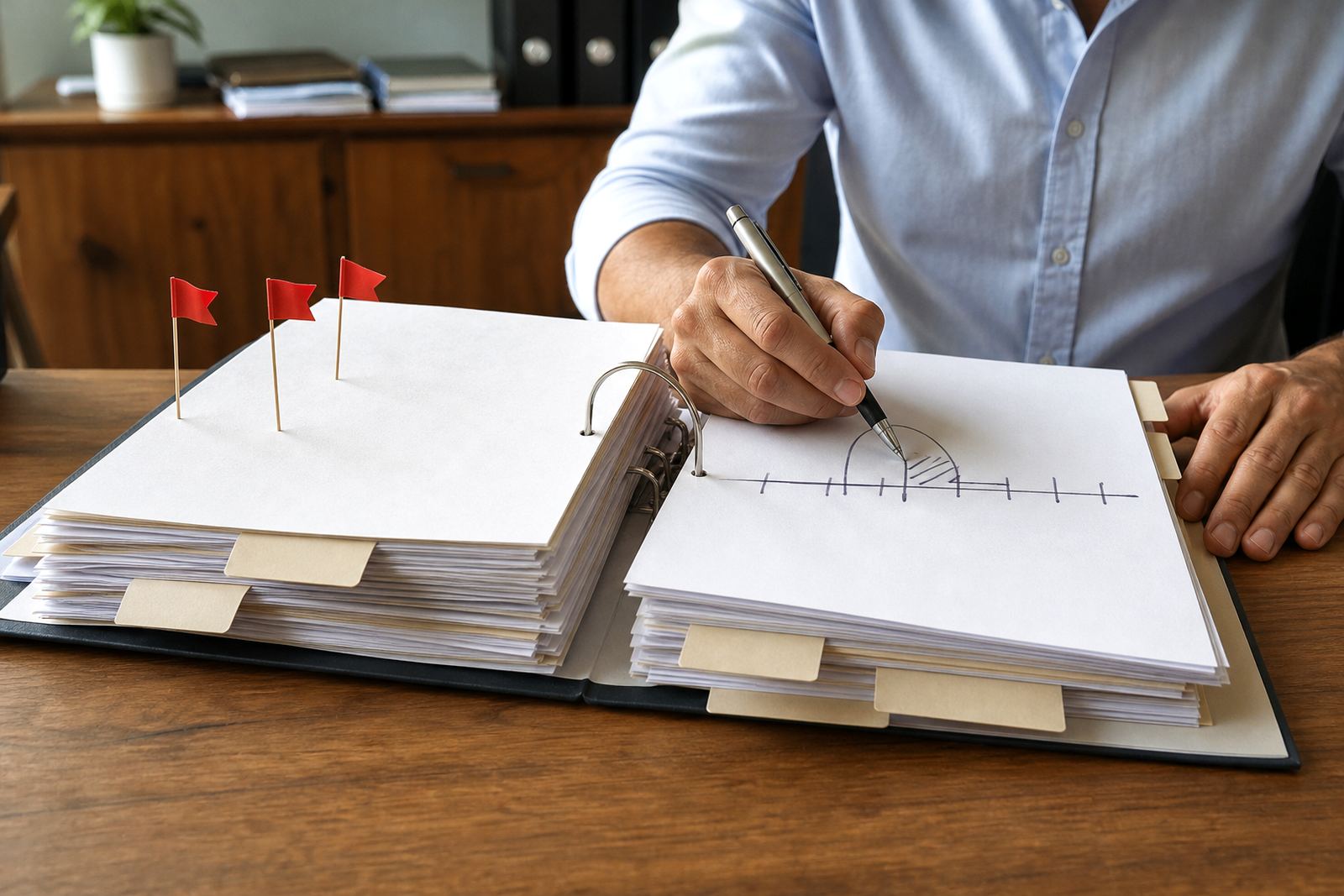


What adverse media actually tells you
Adverse media is simply negative information found in credible public sources. It can point to fraud allegations, insolvency matters, litigation, regulatory action, environmental complaints, labour disputes, crime links or repeated payment trouble. On its own it is not proof of wrongdoing, but it is often the first sign that a closer look is needed.
For buyers and lenders, the value lies in timing. A company may look neat on paper, yet the news trail, court records or local reports may show a pattern that affects repayment, delivery or property title. That is why reputational screening forms part of practical due-diligence work, not a separate box to tick at the end. Done properly, it helps a lender ask better questions and helps a buyer avoid a costly surprise.
- Look at the source, date and detail of each mention
- Separate confirmed facts from rumours and comments
- Check whether the issue is current, repeated or already resolved
- Test the media result against company records and property documents
Why lenders and buyers use it in South Africa
In South Africa, adverse media screening is useful because transactions often move across several moving parts at once: company ownership, property transfer, municipal compliance, occupational use and finance conditions. A lender may need to know whether a director has a history of failed ventures, whether a property has ongoing zoning complaints, or whether a supplier has been linked to unresolved disputes that could affect performance.
For a buyer, especially in a private sale or business acquisition, the reputational picture can change the decision entirely. A clean title deed is not enough if the business operating from the premises is facing repeated labour claims, tax disputes, or local regulatory issues. And for commercial property, even a small issue can affect occupancy, insurability and eventual resale value.
We have seen cases where the public record showed a pattern of late filings and creditor action, while the site visit showed a business under pressure with poor occupancy and obvious maintenance gaps. The paperwork alone would not have told the full story.
- Company acquisitions, shareholder changes and director exits
- Commercial property purchases, especially where tenants matter
- Loan approvals where the borrower’s track record needs context
- Portfolio reviews where one weak asset can affect the rest
How a proper screening process is done
Good adverse media work is not just a quick internet search. It starts with the correct entity name, registration details, trading names, directors and linked properties. A common problem is matching the wrong person or the wrong company, which can create noise and waste time. The aim is to confirm whether the mention really belongs to the subject under review.
We then group findings by type and relevance. A one-off community complaint is treated differently from a court judgment or repeated regulatory action. We also compare the timing of the reports with the transaction date. A matter from ten years ago may have limited value if it has been resolved, but a recent issue can change the risk view straight away.
After that comes the practical step: cross-checking the findings with ownership records, document gaps, site verification and occupancy checks where needed. That is where reputational screening becomes useful in the real world, because the story starts to line up with the legal and physical evidence.
- Verify names, registration numbers and linked addresses first
- Classify findings by severity and current relevance
- Compare reports with deeds, company filings and transaction files
- Use field verification where the paper trail is not enough
A local example from Gauteng
Take a Centurion investor looking at a light industrial property in Midrand with a tenant on a three year lease. On paper, the deal looks neat. The rent seems acceptable, the building is occupied and the seller’s documents appear in order. But adverse media searches show the operating company has faced repeated allegations of unpaid suppliers, a labour dispute and a licensing issue at another site in Johannesburg.
That does not mean the deal must stop. It does mean the buyer and lender should ask whether the tenant has cash flow pressure, whether the current lease is secure, and whether there are any hidden risks that could affect occupation. If the issue is serious, a tighter loan condition or a lower offer may be more sensible. In another case, the same type of screening might uncover positive information too, such as a clean public record and consistent management, which supports the transaction.
In Gauteng, where many buyers are moving quickly between Pretoria, Sandton and Centurion, this sort of check can save time later. It also helps when local municipal or compliance matters are part of the picture, because a reputational issue often sits alongside a paper issue and not separately.
What adverse media should never be used for
Adverse media is a screening tool, not a verdict. It should not replace legal advice, valuation, company searches, title checks or direct verification with the parties involved. A careless read of a headline can overstate the problem, while a rushed dismissal can miss a real risk. The practical approach is to treat each result as a lead and then test it properly.
It is also important to avoid confusing gossip with evidence. Social posts, comments and hearsay can be useful prompts, but they are not enough on their own. When a report is prepared for a lender, the best output is clear: what was found, why it matters, and what still needs confirmation. That makes the result usable in a credit committee or transaction file.
- Do not rely on headlines alone
- Do not mix unrelated entities with similar names
- Do not treat older matters as current without checking resolution
- Do not skip site or occupancy verification where needed
How this fits into a full due-diligence report
When adverse media sits inside a fuller due-diligence process, it adds context to the rest of the file. Company background checks show who is behind the deal. Property record searches and ownership verification show what is being bought or financed. Document gap review shows what is missing. Field verification and occupancy checks confirm what is actually happening on the ground. Together, these steps give buyers and lenders a clearer view of risk.
That is why reputational screening works best when it is not treated as a once off search. In practical terms, it helps answer simple but important questions: Is this the right counterparty? Is the asset being used as claimed? Is there anything in the public record that changes the risk? If the answer is yes, then the transaction team can respond early rather than after money has moved.
For buyers and lenders across Pretoria, Johannesburg, Cape Town, Durban and Bloemfontein, that kind of early warning can be the difference between a manageable issue and an avoidable loss. It is not about drama, it is about checking the facts before you sign.