

Start With the Question: What Are You Really Buying?
Before buying a company, first define the asset in plain terms. Are you buying shares, taking over a business unit, or acquiring property tied to the trading entity? Each route carries a different legal and financial risk, and the wrong assumption can cost far more than the purchase price. A clean-looking monthly turnover can hide unpaid tax, weak supplier terms, or a director who is stepping out with no handover plan.
In practice, buyers in Centurion, Johannesburg and Cape Town often start with a high-level teaser and then rush to a deal letter. That is where trouble begins. The better approach is to ask what the business owns, what it owes, who controls it, and whether the operation can keep trading after transfer. If the answer is unclear, pause and get the file checked properly.
The Company File Should Match the Real Business
A due-diligence file should not be a stack of loose PDFs with gaps in dates and signatures. It should show a matching story across registration records, director details, financial statements, contracts and tax-related documents. If one document says the company has two directors and another says three, that is not a small admin issue, it is a warning sign.
Useful checks before buying include:
- company registration and current director profile research
- shareholding and ownership verification
- latest financials compared to bankable trading patterns
- tax and compliance documents with no missing periods
- lease agreements, asset lists and key supplier contracts
In Gauteng, many buyers focus on the trading history but forget the paperwork trail. A transaction file audit helps show whether the records line up or whether something has been patched together after the fact. That matters when lenders, attorneys or investors need a clear answer fast.
Check the Property, Not Just the Turnover
If the business trades from a factory, office, warehouse or retail site, the property side must be verified as carefully as the company itself. Ownership is one point, but occupancy, zoning, lease terms and municipal constraints can shift the value of the deal. In Durban, coastal humidity can affect stored stock and equipment, while in industrial areas around Pretoria and Midrand the main issue may be access, loading space and power continuity during load-shedding.
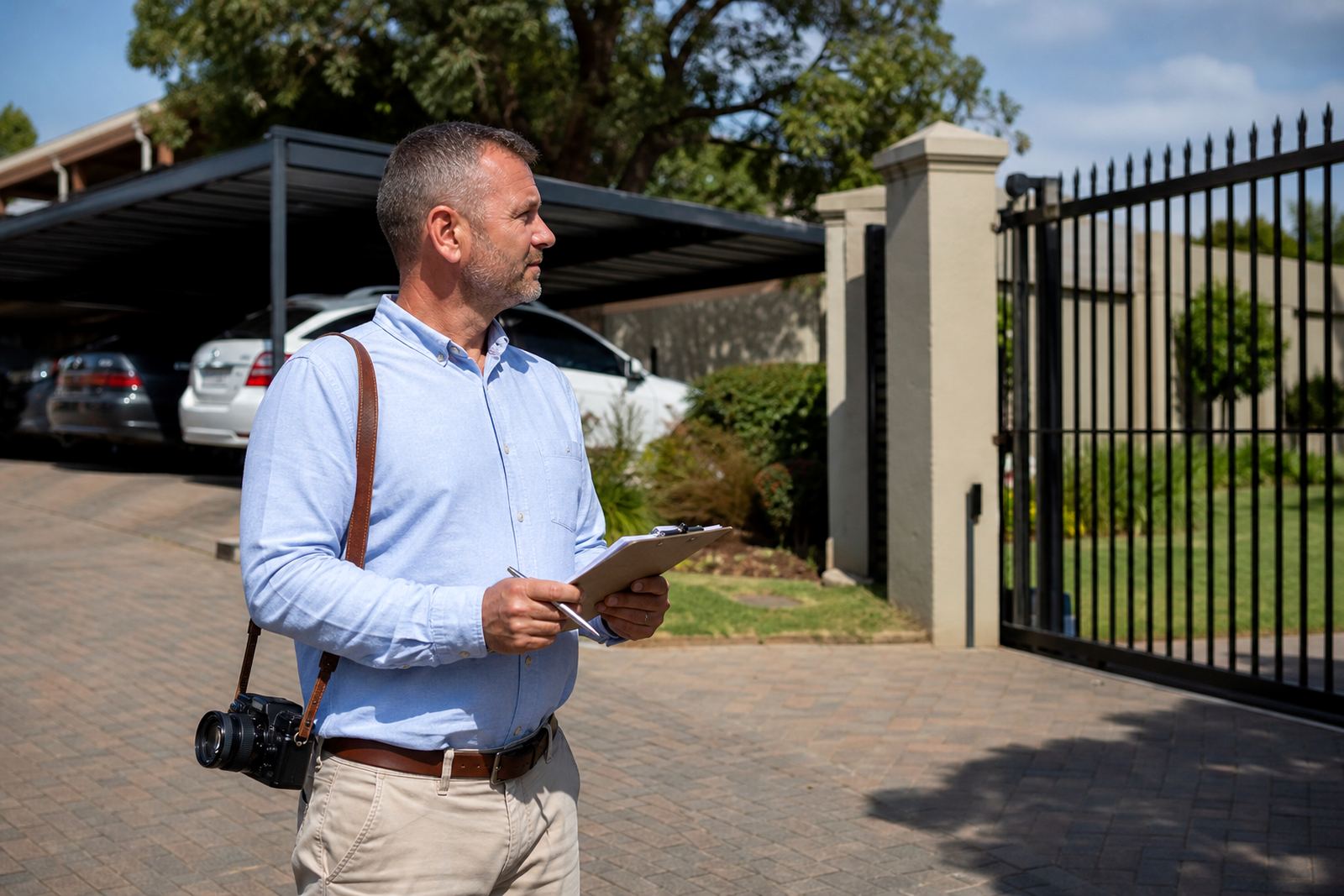
Property record searches and site visit verification help confirm whether the business is where it says it is, whether it occupies the space lawfully, and whether the premises fit the type of operation you are buying. A warehouse can look full on a walkthrough, yet still be operating on a lease that expires in three months or from premises that do not permit the stated use.
- confirm title or lease position
- verify occupancy and who is actually in control of the site
- check for municipal or zoning issues that may affect use
- inspect whether the layout suits stock, staff and deliveries
- test whether utilities and access support daily operations
A simple field visit can save a buyer from taking over a business that is technically trading but physically unstable.
Debt, Credit and Hidden Exposure Need a Hard Look
The biggest surprises often sit in liabilities, not revenue. A company can show decent sales and still carry overdue supplier accounts, tight cash flow, disputed debts or credit exposure that only appears when a lender asks questions. If the target depends on short-term funding to keep the doors open, the business may be worth less than it looks on paper.
Credit risk screening and adverse media research help identify whether the target has payment problems, legal disputes, insolvency pressure or repeated negative mentions that could affect the transaction. For lenders in particular, this is not about being cautious for the sake of it. It is about measuring whether the borrower or target can withstand ordinary trading pressure after transfer.
Questions worth asking include:
- Are there any overdue debts or disputed balances?
- Has the business missed supplier, tax or payroll payments before?
- Are there personal sureties or guarantees tied to the current owners?
- Is the business dependent on one big debtor or one major contract?
- Would the company survive a 30 day delay in collections?
These checks are especially important in sectors where stock moves quickly and margins are thin, because one bad month can affect the whole purchase decision.
Look at the People Behind the Numbers
Buying a company is also buying relationships, habits and decision-making. If the key person is the only one who knows the suppliers, pricing or operational routines, the value of the deal can drop sharply once they leave. That is why director profile research, management review and staff dependency checks matter before signature.
Ask who holds the customer relationships, who signs off payments, who controls stock and who can keep the business running during the first 90 days after transfer. A company with tidy accounts but no second layer of management is risky, especially if the owner has been making all the calls from a single cell phone and no one else knows the details.
In a practical sense, a buyer should assess whether the team can handle load-shedding, supplier delays, transport disruptions and routine compliance tasks without constant owner intervention. In Bloemfontein or Durban, where local conditions and logistics can affect trading patterns, that resilience is worth checking before a deal closes.
Use a Local Example to Stress-Test the Deal
Consider a buyer looking at a light manufacturing company in Centurion with a satellite sales office in Johannesburg. On paper, the business has steady revenue, a decent asset base and a long trading history. But the due-diligence report shows that the factory lease is due for renewal, the site has one irregular occupancy issue, two directors are still listed although one has already stepped away, and a major customer now accounts for most of the monthly income. The seller says everything will be fine after transfer.
That is exactly when buyers need to slow down. A site visit might show that deliveries are delayed by access constraints, the power backup is only partly functional and the stock records do not match the physical count. None of that appears in a glossy pitch deck, but it all changes value. The point is not to find faults for the sake of it. It is to price the deal correctly and decide whether the business can be transferred without a nasty surprise.
For companies and property-linked transactions across Pretoria, Sandton, Cape Town and beyond, a practical report should help the buyer answer one question: is this a solid purchase, or a risk dressed up as opportunity?
What a Good Pre-Buy Report Should Help You Decide
A proper due-diligence report should do more than list documents. It should help the buyer decide whether to continue, renegotiate or walk away. That means the findings must be clear enough for buyers, lenders and attorneys to use without wading through noise.
Before buying, the report should answer:
- Is the company legally and operationally what it claims to be?
- Are the ownership, property and management details consistent?
- Are there debts, disputes or compliance gaps that change the risk?
- Can the business keep trading after the sale under normal South African conditions?
- Is the asking price aligned with what the records and site checks show?
When the answer to any of those is uncertain, the buyer should not guess. A focused report brings the facts into one place so the decision is made on evidence, not optimism.