

When Procurement Needs More Than a Quote
In Centurion and across South Africa, procurement teams are under pressure to move fast while still protecting the business. A supplier may look competitive on paper, but if the entity is newly registered, has unstable ownership, weak trading history, or unresolved property issues, the risk lands with the buyer. That is where a due-diligence report helps. It gives your team a clear view of who owns the business, where it operates, whether the stated address matches the real operation, and if there are warning signs that need attention before onboarding.
This is especially useful for corporates buying goods or services at scale, or for lenders funding a contract based on supplier performance. Around Report SA works with procurement, finance and compliance teams in Pretoria, Johannesburg, Sandton, Midrand, Cape Town, Durban and Bloemfontein. The aim is practical: reduce surprises, support approval decisions, and keep your file audit-ready when questions come up later.
What Procurement Teams Usually Ask Us To Check
Most procurement files need the same core checks, but the depth changes depending on the contract value and the exposure. For a once-off service provider, a lighter screen may be enough. For a long-term vendor or a supplier tied to a municipal or corporate framework, teams often want a fuller picture before issuing a purchase order or signing a supply agreement. We combine company research, property checks and risk screening into one structured report.
- Company background checks and registration details
- Director profile research and ownership verification
- Property record searches and occupancy checks
- Site visit verification where the address must be confirmed
- Document gap review for missing or inconsistent records
- Adverse media research and credit risk screening
- Transaction file audit for procurement packs and vendor onboarding
For buyers dealing with high-risk categories such as security, cleaning, logistics, engineering support or equipment supply, a report can also help identify whether the vendor has the footprint and staffing to deliver. If the supplier says they have a warehouse in Gauteng but the paperwork points elsewhere, that needs attention before the deal goes further.
Typical Supplier Setups We See In The Field
Procurement teams often ask us to verify suppliers that present very different operating models. Some are owner-managed firms running from a commercial unit in Centurion or Midrand, while others trade from a warehouse, a home office, or a shared industrial property in Johannesburg or Durban. The issue is not the type of premises itself, but whether the setup matches the size of the contract and the obligations in the proposal.
A common setup includes a small admin office, one or two delivery vehicles, a storage area, and a team that works partly on site and partly remotely. In some cases the supplier claims to have stock on hand, but the premises do not support the volumes being quoted. We look at practical signals such as signage, trading activity, occupancy, access control, loading space, and whether the property is suited to the service being offered. In coastal areas like Cape Town and Durban, we also note storage conditions where humidity may affect stock, packaging, or equipment.
- Office-only suppliers with minimal stock on site
- Light industrial operations with small warehouse space
- Mobile service teams operating from a central base
- Contractors using leased premises with shared access
- New vendors with a registered address but no visible trading activity
How To Plan A Cleaner Procurement File
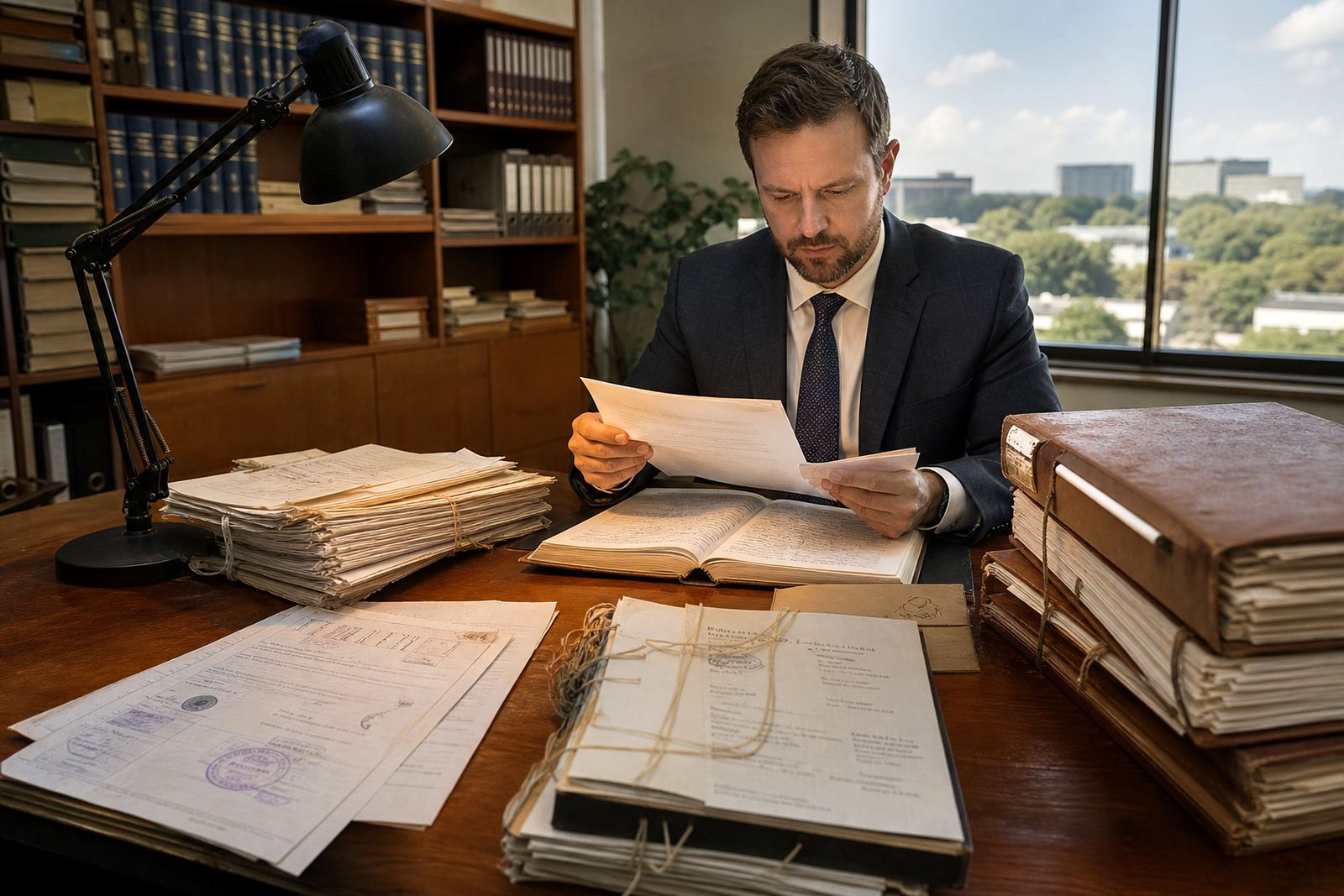
Good procurement planning starts before the vendor reaches final approval. If your team knows the likely contract value, delivery area, and operational risk, the report can be scoped properly and the right checks can be ordered at the right time. That saves back-and-forth and avoids delays when the buying committee asks for proof of ownership or trading history at the last minute.
We normally suggest that the buyer or procurement lead prepares the basics first: the supplier name, registration number if available, the trading address, the contact person, and the nature of the goods or services. If there are multiple sites, list each one. If the vendor will work in Gauteng but invoices from the Western Cape, note that too. This helps us decide whether a property search, a field verification, or a transaction file audit is needed.
For teams managing several vendors at once, portfolio risk mapping can help spot patterns. That is useful when a group of suppliers share directors, premises, or subcontracting arrangements. It can also help with annual supplier refreshes and renewal cycles, especially where contract terms require ongoing compliance checks.
Common Mistakes That Slow Approval
Most procurement delays are caused by avoidable gaps in the file. The report can only be as strong as the information supplied and the questions asked. A supplier may be perfectly legitimate, but if the trading name, legal entity, and address are mixed up the approval trail becomes messy fast.
Other common mistakes include approving a vendor on the strength of a referral alone, skipping ownership verification on newly formed entities, or assuming a website and a physical presence are the same thing. Teams also sometimes overlook document gaps until the end of the process, when there is less time to fix them. In one or two cases the supplier is active but the premises are not suitable for the volume promised, which can create delivery problems later on.
- Using only a quotation and not checking the legal entity
- Ignoring director changes or shared ownership links
- Accepting a trading address without confirming occupancy
- Leaving adverse media screening until after award
- Not matching the scope of work to the supplier’s actual capacity
A careful review upfront is usually cheaper than a cancelled order, a disputed invoice, or a supply failure after award.
Budget Ranges For Due-Diligence Work
Budgets depend on how deep the review must go. A basic company background check for a low-value onboarding may sit at a few thousand Rand, while a fuller package with ownership verification, property record searches, site verification and document review can move into a higher bracket. For larger procurement files, especially where the supply risk is material, teams often budget more for a complete report than for an error later in the contract.
As a practical guide, many South African procurement teams work with these broad ranges: simple screening from about R1,500 to R3,500, mid-level due diligence from around R4,000 to R9,500, and more detailed file audits or multi-site reviews from roughly R10,000 upwards. The final figure depends on turnaround time, the number of entities involved, whether field verification is needed, and whether the report must be customised for internal approval packs or lender review. If your team handles several supplier files each month, a standard reporting structure usually keeps costs more predictable.
The value is not just in the report itself. It is in having a proper record when audit, finance or executive teams ask why a vendor was approved. That documentation can save time across the full contract lifecycle.
What Buyers And Lenders Get In The End
At the end of the process, procurement teams need a report that is clear, structured, and easy to file. Around Report SA prepares due-diligence reports that help buyers and lenders assess risk before commitment. The work is handled from Centurion, Gauteng, with support for clients across Pretoria, Johannesburg, Sandton, Midrand, Cape Town, Durban and Bloemfontein.
Clients usually come to us when they want an independent view before onboarding, before a contract renewal, or before releasing funds against a supplier arrangement. The report can be tailored to the decision at hand, whether that is a single vendor, a group of suppliers, or a broader portfolio review. If your team needs a clearer basis for approval, this kind of research gives you the facts to work with instead of guesswork.
Procurement works best when the file is clean, the risk is understood, and the decision is supportable. That is what this service is meant to do.