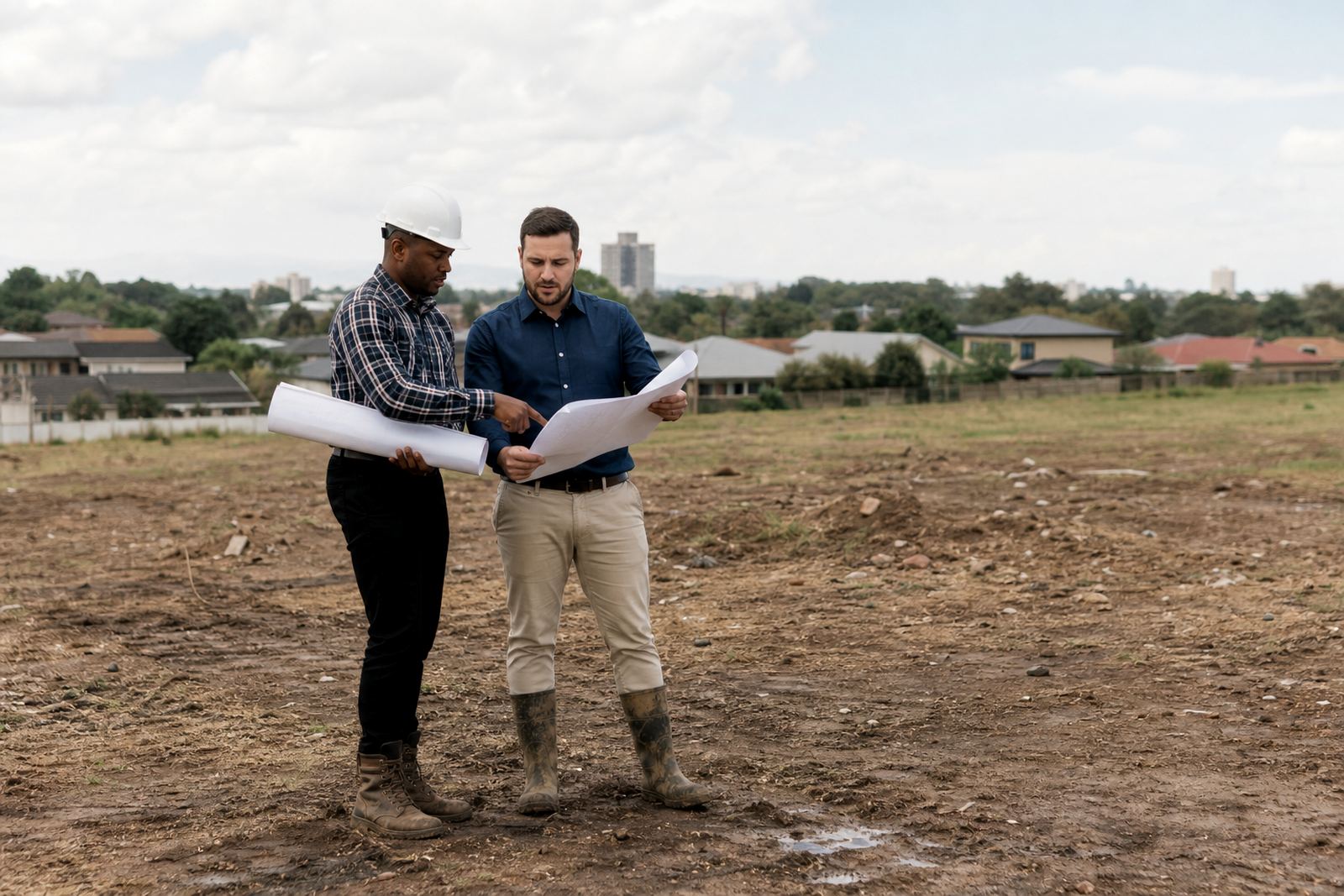
Why tenants order a due-diligence report before signing
When a business is planning a branch move, warehouse lease, office relocation or a longer-term expansion, the lease is only part of the risk. Tenants need to know who they are dealing with, whether the property is correctly owned and registered, and whether there are issues that could delay occupation or disturb trading later on. That matters even more in South Africa where municipal processes, load-shedding, access control, water interruptions and service backlogs can affect day-to-day operations.
Our tenant reports are used by businesses in Centurion, Pretoria, Johannesburg, Sandton, Midrand, Cape Town, Durban and Bloemfontein when they want a clearer picture before they sign. The report helps procurement teams, finance teams and directors compare options, test assumptions and ask the right questions before deposits are paid or fit-out work begins.
- Check the landlord and ownership position before lease finalisation
- Confirm whether the premises match what was advertised or shown
- Identify gaps in documents that can slow handover or occupation
- Support internal approval for strategic premises decisions
What a tenant report typically covers
A good tenant decision needs more than a viewing and a lease draft. We combine company background checks, property record searches, ownership verification, director profile research and site visit verification into one practical report. Where needed, we also include occupancy checks, document gap review, adverse media research, credit risk screening, transaction file audit and portfolio risk mapping for groups taking multiple sites.
This is useful for firms taking offices, retail space, storage units or light industrial premises. For example, a distribution team in Gauteng may need to know whether truck access is suitable, whether the yard can handle turning circles and whether the occupancy pattern matches the landlord’s claims. A professional services tenant may care more about generator backup, parking ratios, security arrangements and whether the building has the right zoning or permissions for the intended use.
- Land ownership and title-linked checks
- Occupancy and site verification
- Company and director background screening
- Document review for missing approvals, certificates or disclosures
Planning the premises layout before you commit
Tenants often sign first and plan later, which can become expensive. Before a longer lease is signed, it helps to map the actual operation into the space. Count the people, the equipment, the storage needs and the visitor flow. In Cape Town and Durban, coastal humidity can affect paper storage, server rooms and some materials. In Gauteng, power interruptions can affect access systems, small plant, refrigeration and connectivity unless backup is built into the plan.
Typical equipment and space considerations include workstations, meeting rooms, server or comms cabinets, filing storage, pallet racking, delivery access, kitchen space, security screening and backup power arrangements. If your operation runs on strict opening hours, factor in municipal noise rules, access control times and building rules that may affect deliveries or after-hours work.
Practical layout questions to ask early:
- Is there enough parking for staff, visitors and delivery vehicles?
- Can the floor load take the planned shelving or equipment?
- Is there adequate fibre, power and backup provision?
- Will the premises suit expansion over the next 24 to 36 months?
The common mistakes tenants make
One of the biggest mistakes is relying on the viewing alone. A clean reception and a good location can hide problems with ownership, permits, building maintenance or disputed occupation. Another common issue is assuming the landlord has all approvals in place when the documents are incomplete or not current. That can cause delays with fit-out, compliance sign-off or occupation.
Tenants also sometimes underestimate the full cost of the move. Fit-out, levies, parking, security deposits, operating costs, rates recoveries and generator contributions can change the numbers quite a bit. A lease that looks affordable on monthly rent may become expensive once the extras are added.
- Signing before checking ownership and landlord standing
- Ignoring site access, loading areas and parking limits
- Overlooking missing compliance documents
- Failing to budget for fit-out, movers and downtime
Budget ranges for tenant due-diligence work
Budget depends on the type of property, the number of parties to check, and how much field verification is needed. A straightforward tenant-focused report for one site may start from about R3 500 to R7 500, while a fuller package with ownership checks, site verification, occupancy review and document analysis can range from R8 000 to R18 000. Larger or more complex transactions, especially where there are multiple entities, repeated searches or time-sensitive turnaround, can move higher.
For companies taking several branches or comparing sites across Pretoria, Johannesburg, Cape Town, Durban and Bloemfontein, portfolio-style work can be priced separately so the findings are easier to compare. If your team needs a fast decision, let us know early, because rushed instructions often need more coordination with field verification and document collection.
We always recommend matching the scope to the lease value and the risk on the table. A six-month short let needs less detail than a five-year strategic premises move, but both still benefit from proper checks.
How the process works for tenants
Clients usually send the property details, the landlord information they have, and any lease papers or marketing material already received. We then assess the instruction, run the relevant company and property searches, verify the site details and review any gaps in the paperwork. If there is a mismatch, missing consent, unclear ownership record or a concern raised by the field check, we flag it clearly in the report.
The goal is to give tenants a practical view they can use in negotiation. That might mean asking for a warranty, a repair commitment, proof of authority to lease, better access terms or a revised occupation date. In many cases, a clear report can prevent a rushed mistake and save far more than the report fee.
- Share the property, landlord and lease draft details
- We check records, conduct verification and review documents
- You receive a structured report with findings and risk points
- Use the findings in negotiations, board packs or lender packs