Why a director check should sit beside the company figures
When a buyer or lender reviews a South African transaction, the company’s latest financials are only part of the picture. A director can shape cash flow, supplier payments, tax compliance, banking behaviour and how quickly a business reacts under pressure. If that person has a history of closed entities, legal disputes or repeated changes in control, the risk profile changes too.
A director check helps separate a clean operating record from one that carries hidden pressure. It is useful in family businesses, shelf companies, property deals with special purpose vehicles, and any transaction where the real decision-maker matters more than the trade name on the form. In Centurion, Pretoria and Johannesburg, we often see buyers focus on assets and overlook who is actually signing, which can become a problem later when disputes start.
What a director background review can uncover
A proper review looks beyond a name match. It checks whether the person is linked to other entities, whether those entities were active or dormant, and whether there are patterns that call for more questions. A single adverse item may not stop a deal but it should be understood in context.
- Directorship history across current and previous companies
- Disqualified or conflicted positions where relevant
- Links to dormant, liquidated or distressed entities
- Adverse media tied to governance, fraud or payment disputes
- Repeated changes in shareholding or control
- Connections to property entities, trusts or holding structures
For lenders, this is especially important where a borrower is a new vehicle with no trading record. For property buyers, it can show whether the counterparty has a habit of moving assets through different entities. That sort of pattern can complicate recovery if a deal sours later on.
How director risk shows up in real transactions
Director issues do not always appear as dramatic red flags. Often they show up as small signs: a company with a strong turnover history but frequent director changes, a seller with multiple linked entities in arrears, or a borrower whose director has a trail of failed ventures in different sectors. On paper the transaction may still look workable, but the structure is carrying more weight than expected.
In Durban, for example, a property buyer may be told that a commercial unit is occupied and income-producing. A director check on the seller entity can reveal whether that same person controls several companies with unresolved disputes or unpaid obligations. That matters if the sale depends on accurate occupancy information and a clean handover. It also matters where coastal humidity affects maintenance costs and the owner has a record of poor upkeep or delayed repairs.
In Bloemfontein or Cape Town, where transactions may involve mixed-use property or smaller private companies, the risk may be less about size and more about governance. A director who has moved through several underperforming entities can indicate pressure points that are easy to miss if the review stops at the company name only.
What buyers and lenders should ask before signing
The most useful director checks are tied to the actual transaction. Instead of asking for a broad report and hoping for the best, work from the question: what could go wrong here, and who is able to cause it?
- Who controls the company today, and who has controlled it recently?
- Are there linked companies with arrears, litigation or dormant status?
- Has the director changed often in the last few years?
- Does the director’s profile fit the scale and purpose of the deal?
- Are there signs of poor compliance, missing records or unusual transfers?
- Is the director also involved in other assets or entities that affect recoverability?
If the answer to any of these questions is unclear, it is better to slow down. A short delay is cheaper than a bad advance, a disputed transfer or a collection process that drags on for months. In our experience, the files that look simple at first often need the most careful checking.
Why site verification strengthens a director check
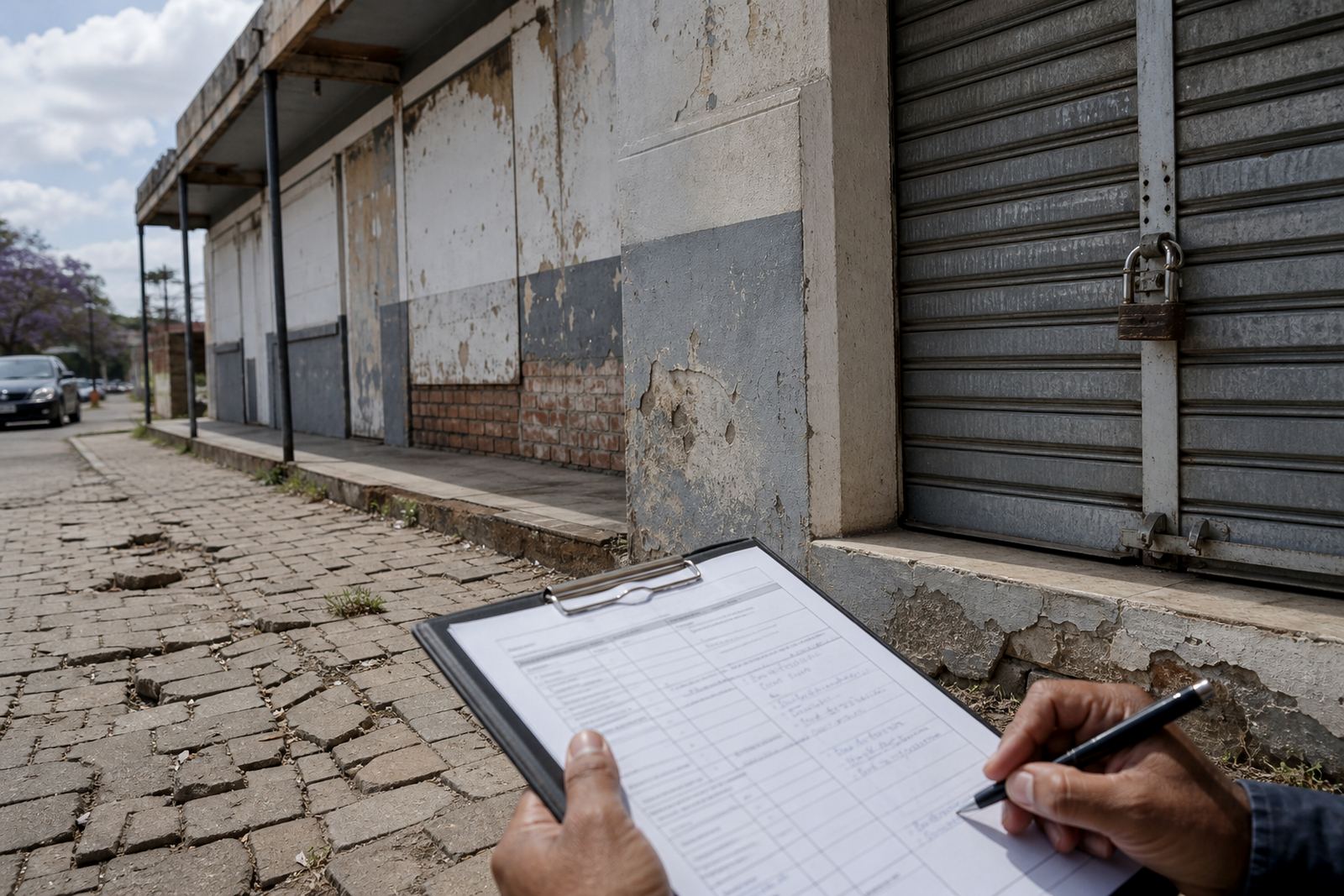
A director profile is stronger when it is tested against the real world. That is where site visits, occupancy checks and document reviews add value. A business may claim to trade from a certain address in Sandton or Midrand, but if the site is empty, shared with unrelated operators or not occupied as stated, the director profile may tell only half the story.
We often combine director research with property record searches, ownership verification and transaction file audits. That approach helps confirm whether the people named in the papers match the people behind the operation on the ground. For lenders, it can support credit decisions. For buyers, it can highlight whether the seller is representing the asset and the entity accurately enough to proceed.
Load-shedding, municipal rules and changing occupancy patterns can also affect how a site performs. A director who understands these realities and keeps records in order is usually easier to deal with than one who leaves gaps in the file and expects the other side to accept them without question.
A local example from Gauteng
Consider a mid-sized company in Centurion that is selling a warehouse and related operating entity to a buyer in Johannesburg. The figures show steady turnover, but a director review reveals that one of the key decision-makers has been associated with several short-lived companies over the past decade, including a few that were left dormant with unpaid obligations. The seller’s explanation is that those businesses were unrelated and failed because of market pressure.
That may be true, but the review gives the buyer and lender a firmer basis for asking for more documents, tighter warranties and clearer proof of ownership. In practice, that can mean checking the transaction file for missing resolutions, confirming who signed key agreements, and verifying that the property occupation matches the stated use. The deal may still go ahead, but with fewer surprises and less room for later dispute.
The value of the check is not to create suspicion where none is needed. It is to show where the risk sits so the parties can price it, cover it or walk away before money changes hands.
What a good director report should leave you with
A useful director check should not read like a pile of unrelated facts. It should answer a simple question: does this person’s history support confidence in the transaction, or does it suggest extra caution?
That means the report needs to be clear, current and linked to the deal at hand. It should help a buyer decide whether to push for more documents, a lender decide whether to tighten terms, and both sides decide whether the transaction still makes sense. When used properly, director background research is not an extra box to tick. It is part of sensible risk control.
For transactions across Pretoria, Johannesburg, Cape Town, Durban and Bloemfontein, the same principle applies. The company may look sound, but the people behind it matter just as much. If the director history is clean, that supports confidence. If it is messy, the right response is to ask better questions before the paperwork is final.