
What a site visit confirms on the ground
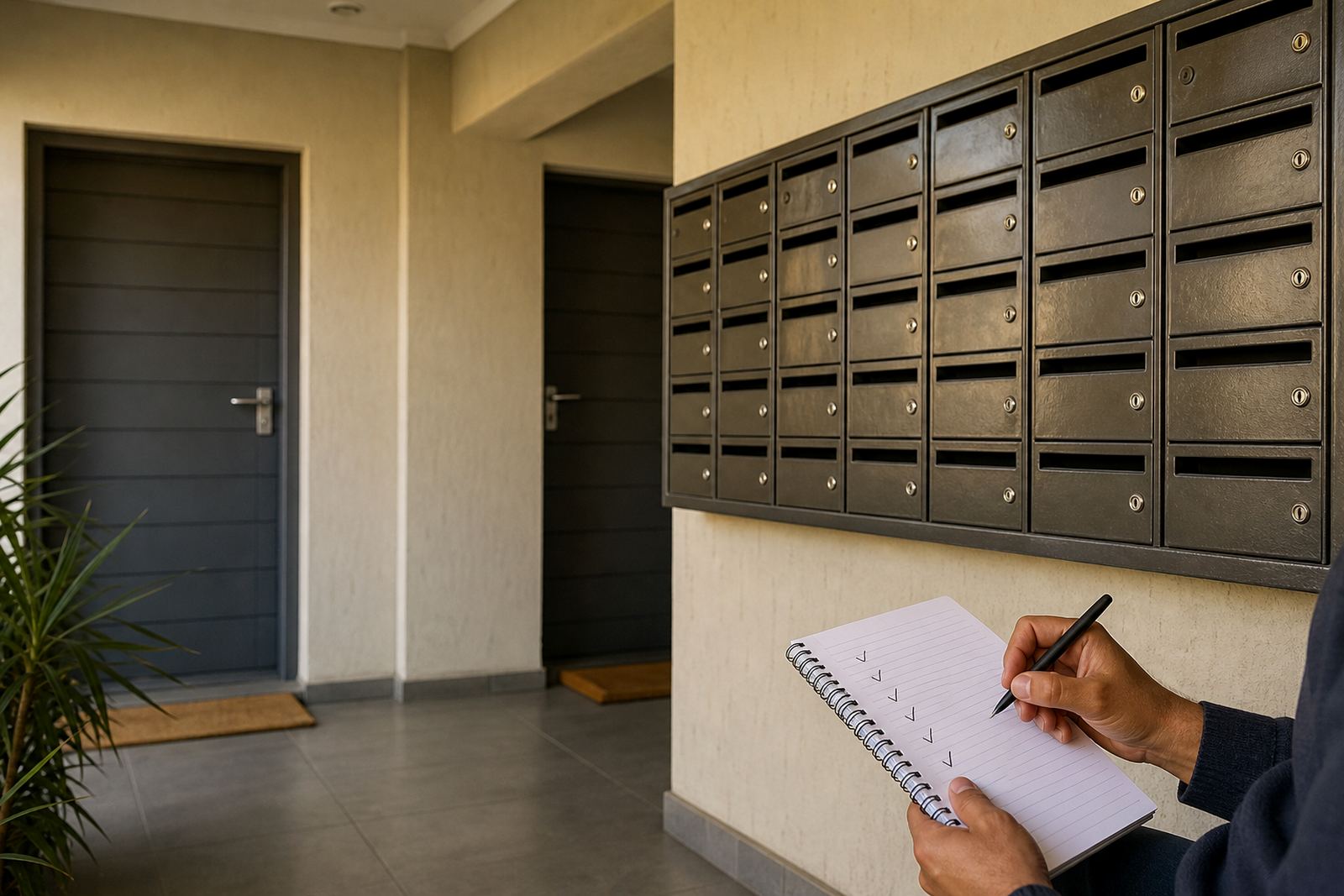
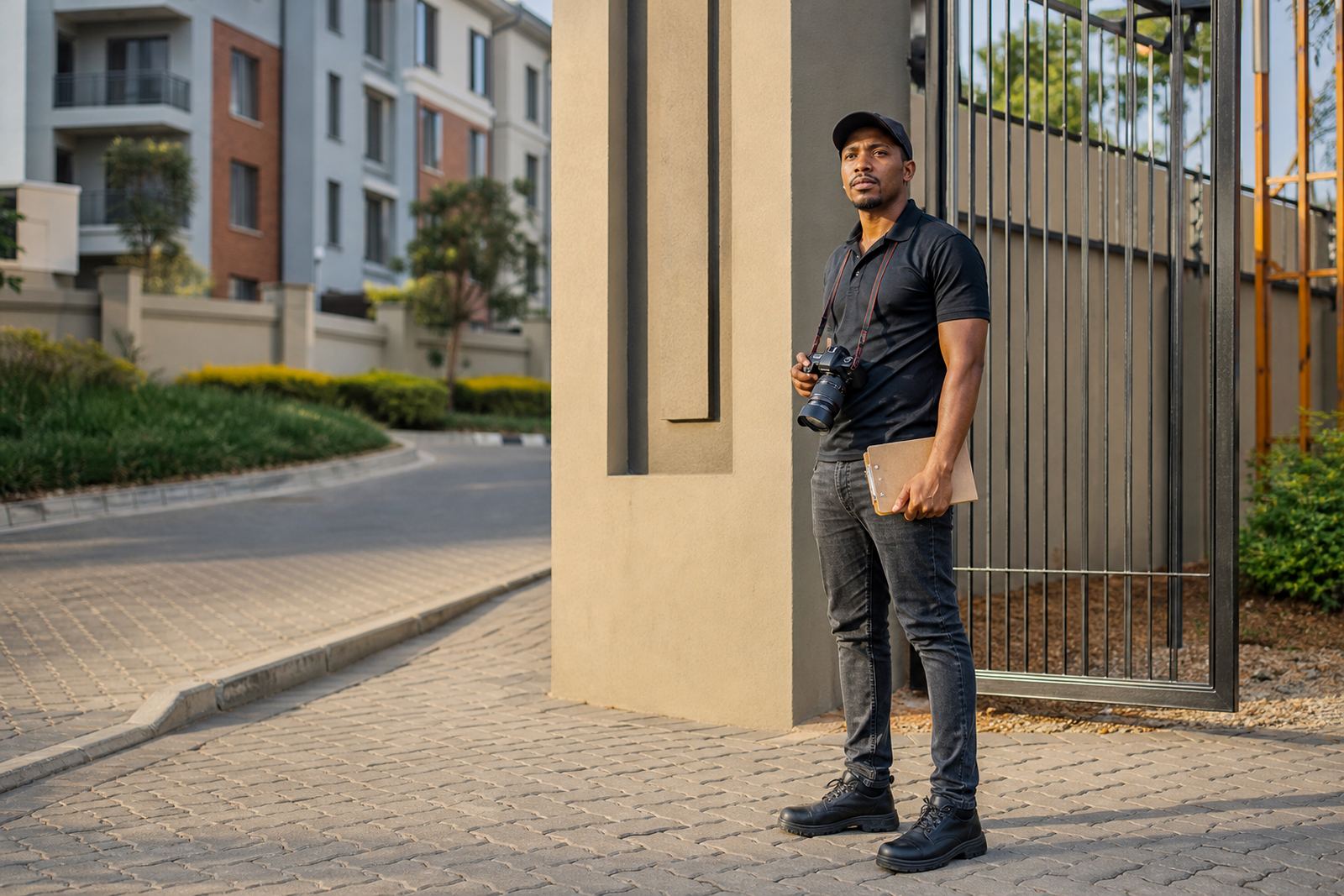
Our Site Visit Verification service is built for buyers, lenders and risk teams that need more than a paper trail. We attend the property and record what can be seen from the site, including visible occupancy, access control, signs of trading or business activity, external condition and any issues that may affect use, enforcement or finance. This is especially useful where municipal records, ownership documents or management information do not tell the full story.
The visit is practical and factual. We note whether a property appears occupied, vacant, partly used or inaccessible, and we capture details that matter in South African transactions such as informal access routes, perimeter fencing, lockable gates, visible maintenance backlogs, security presence and whether the premises appear suitable for the stated purpose. Where relevant, we also record surrounding activity, neighbouring uses and any signs that the property may be affected by load shedding, water interruptions or general wear from coastal humidity.
These observations help to reduce surprises at transfer or drawdown stage, and they give decision-makers a clearer view of the asset as it stands today not as it was described in a file months ago.
What is included in the verification report
Each report is tailored to the instruction and the type of property. For a warehouse in Centurion, the focus will be different from a sectional title unit in Sandton or a small retail site in Durban. We keep the report clear, structured and easy to use in credit committees, legal reviews and internal risk packs.
- On-site confirmation of visible occupation or vacancy
- External condition notes on roofs, walls, paving, boundaries and access points
- Photographic record of the property and key visible features where permitted
- Confirmation of business activity or apparent residential use from the exterior
- Observations on security, access control and signage
- Notes on surrounding activity, nuisance factors or apparent operational risks
- Field comments on maintenance needs, deterioration or abnormal site conditions
- Exception notes where access is restricted or the site cannot be fully observed
We do not dress up uncertainty. If a gate is locked, if the unit is occupied but no one responds, or if the site is partially obscured, that is recorded plainly. That kind of detail is often what helps a lender or buyer decide whether to proceed, pause or ask for further proof.
How the site visit is carried out
The process starts with your instruction and the property details. We confirm the location, access method and any special requirements before scheduling a field visit. For commercial sites we work around operating hours where possible, while residential or sectional title visits are planned to avoid unnecessary disturbance to occupants and neighbours. In some areas, especially busy parts of Johannesburg or Pretoria, timing matters because access roads, security checks and traffic can affect what can be observed in a short window.
Our field verification lead coordinates the visit and the research team checks the instruction against available property information so the visit is focused and efficient. When needed, we will flag if a second visit may be useful, for example where a tenant appears to be active after hours or where a property is part of a larger portfolio and needs separate confirmation. We aim to return a usable answer, not just a set of notes.
- Receive instruction and confirm the property target
- Plan the visit and practical access route
- Attend the site and record visible findings
- Review findings against the instruction
- Issue the report with clear commentary and exceptions
Turnaround, pricing approach and when a second visit helps
Turnaround depends on the location, access conditions and how many properties are included. A single urban property in Centurion, Midrand or Sandton may be completed faster than a remote site or a property with limited access. Where urgency is important, we can prioritise the instruction and agree a realistic delivery window before the visit goes ahead. If there are multiple sites in one portfolio, we will sequence them to keep the reporting consistent and cost effective.
Pricing is based on the travel required, the complexity of the site, the level of detail requested and whether photographs, extended commentary or repeat attendance are needed. Simple site checks are priced differently from full field verification assignments with comparison notes or higher-risk locations. We keep the pricing approach transparent so buyers and lenders know what they are paying for before work begins.
A second visit is useful when conditions change quickly, such as where a tenant has recently vacated, there is active refurbishment, or a property is affected by intermittent power supply, weather damage or municipal service interruptions. In those cases, a follow-up can prevent a decision being made on stale information.
Practical checks for South African property conditions
Site Visit Verification is not just about whether a building stands on the erf. It is about how the property functions in practical terms. In South Africa that often means checking for signs of patch repairs after storms, unstable fencing, water ingress, vandalism, overgrown access ways, broken lights or visible signs that the site has not been maintained. In coastal towns we pay attention to corrosion and salt-air wear, while inland we often see sun damage, dust accumulation and roof deterioration that only becomes obvious on site.
Where relevant, we note whether the premises appear fit for occupation, whether there is clear evidence of use, and whether the surrounding area supports the stated purpose of the property. For example, a distribution site with no visible loading activity may raise a question, while a residential unit with consistent signage and secure access may confirm what the file suggests. These observations do not replace legal or valuation work, but they strengthen the facts behind it.
- Visible use, vacancy or mixed occupation
- External maintenance state and obvious defects
- Security features and site access controls
- Neighbourhood activity and surrounding land use
- Signs of weathering, vandalism or neglect
Keeping verification current for repeat lending and portfolio reviews
For lenders and portfolio managers, site verification works best when it is kept current. A property can change hands, lose a tenant, fall into disrepair or be reconfigured in a matter of months. We therefore recommend periodic maintenance intervals based on risk and use. A low-risk owner-occupied property may only need an update when a transaction is underway, while a leased commercial site or higher-risk asset may need more regular confirmation.
As a practical guide, many clients request annual verification for stable assets, six-month checks for active commercial portfolios, and faster follow-up where payment stress, vacancy risk or enforcement concerns are present. If there are known issues such as deferred maintenance, disputed occupation or limited site visibility, a more frequent schedule can be agreed. That way the record stays useful for credit review, renewal, refinancing or sale.
Our Centurion base supports work across Pretoria, Johannesburg, Cape Town, Durban and Bloemfontein, with local field coordination that keeps the process orderly and timeous. The goal is simple: give you a current picture of the property so the next step is based on what is actually on site.
Key facts
| Service type | On-site property and occupation verification |
|---|---|
| Primary use | Buyer due diligence, lender checks and portfolio risk review |
| Coverage | Centurion, Pretoria, Johannesburg, Sandton, Midrand, Cape Town, Durban and Bloemfontein |
| Typical outputs | Occupation status, access notes, external condition, activity indicators and exceptions |
| Turnaround | Depends on location, access and instruction urgency |
| Review interval | Annual to six-monthly for many portfolios, with faster checks where risk is higher |